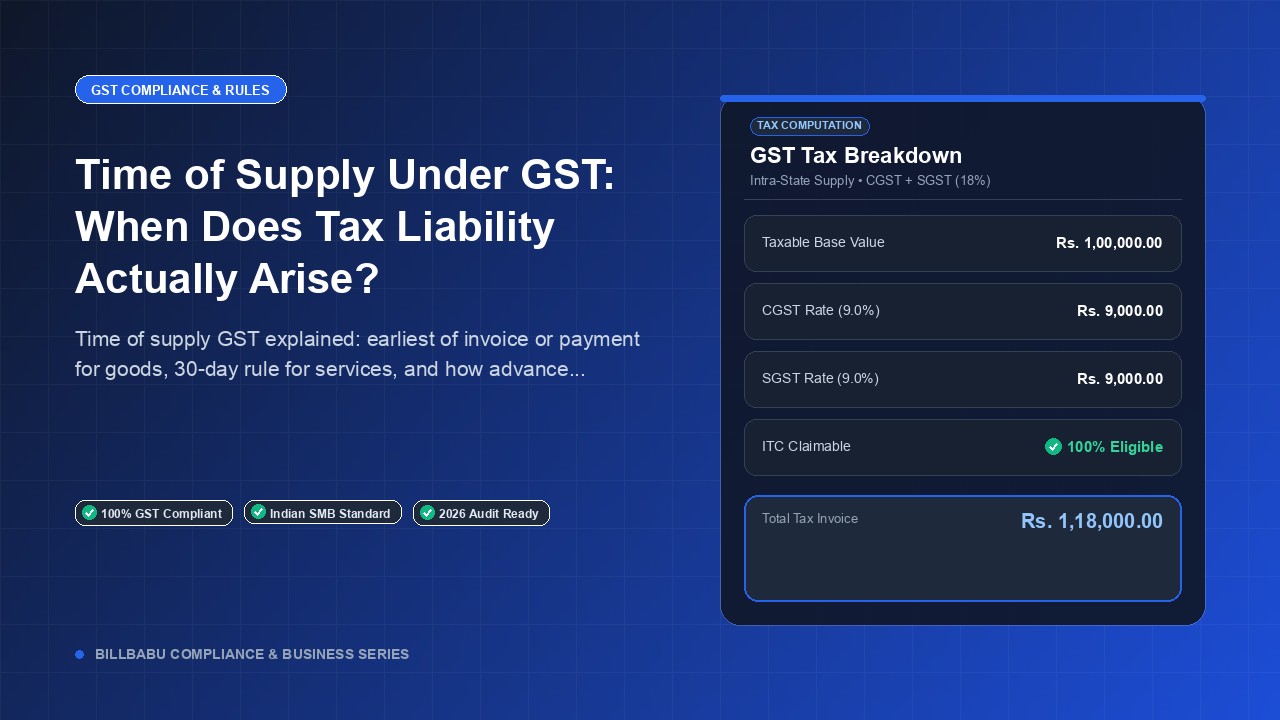
Time of Supply Under GST: When Does Tax Liability Actually Arise?
Time of supply GST explained: earliest of invoice or payment for goods, 30-day rule for services, and how advance receipts trigger GST liability.
BillBabu Team
BillBabu App Team
Time of supply GST explained: earliest of invoice or payment for goods, 30-day rule for services, and how advance receipts trigger GST liability.
Why Time of Supply Matters More Than Invoice Date
Time of supply (TOS) determines the tax period in which GST liability arises and must be reported in GSTR-3B. It is not always the invoice date — for services, missing the 30-day invoicing window shifts TOS to the service completion date, and for advances received against goods or services, TOS is the date of receipt of payment. Getting TOS wrong means tax is reported in the wrong period, triggering interest at 18 percent for the delay even if the absolute tax is paid correctly later. Sections 12 to 14 of the CGST Act lay down the rules.
Time of Supply for Goods Under Section 12
For goods under Section 12, TOS is the earliest of: the date of issue of invoice or the last date by which the invoice should have been issued (Section 31), or the date of receipt of payment. Under Notification 66/2017, suppliers of goods (other than composition dealers) are no longer required to pay GST on advances received — TOS for advances on goods reverts to the invoice date. This is a significant relief for manufacturers and traders who routinely receive booking advances on large orders.
Time of Supply for Services Under Section 13
For services, TOS under Section 13 is the earliest of: the date of issue of invoice if issued within 30 days of completion of service, or the date of completion of service if the invoice is issued late, or the date of receipt of payment. Crucially, the advance receipt rule continues to apply for services — receiving Rs. 1 lakh advance from a client triggers GST liability immediately even before any work is done or invoice is raised. This is a major working-capital trap for consultants and agencies who routinely collect upfront retainers.
Time of Supply Under Reverse Charge (Section 12 and 13 RCM)
For goods under RCM, TOS is the earliest of: the date of receipt of goods, the date of payment, or 30 days from the invoice date. For services under RCM, TOS is the earliest of: the date of payment, or 60 days from the invoice date. If neither can be determined, TOS is the date of entry in the recipient books. RCM on import of services (AWS, Azure) and on services from unregistered legal advocates are the most frequent triggers, and TOS errors here cascade into GSTR-3B reporting mistakes.
Capturing TOS Correctly With BillBabu
BillBabu links each invoice to a service start and completion date, tracks advance receipts against future invoices, and computes the correct TOS automatically. The monthly liability dashboard separates invoiced-and-due, advance-received-but-uninvoiced, and RCM liabilities so nothing slips through. For consultants and project-based businesses, this prevents the classic mistake of paying GST on an invoice in March that was technically liable in February due to an advance.
Built for Indian small businesses. BillBabu is GST-compliant billing software that helps you create invoices, manage estimates, track payments and stay audit-ready — from your phone. Learn more about BillBabu or download the app.
Tags
Related Articles
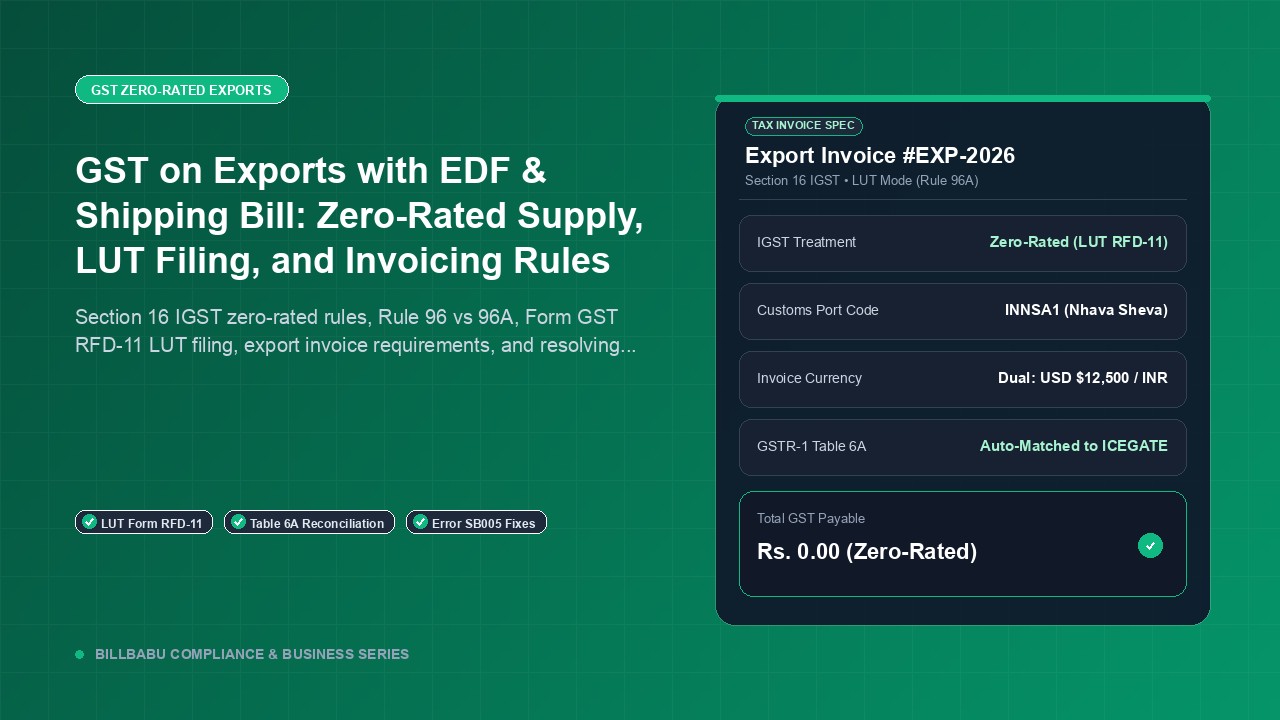
GST on Exports with EDF & Shipping Bill: Zero-Rated Supply, LUT Filing, and Invoicing Rules
8 min read
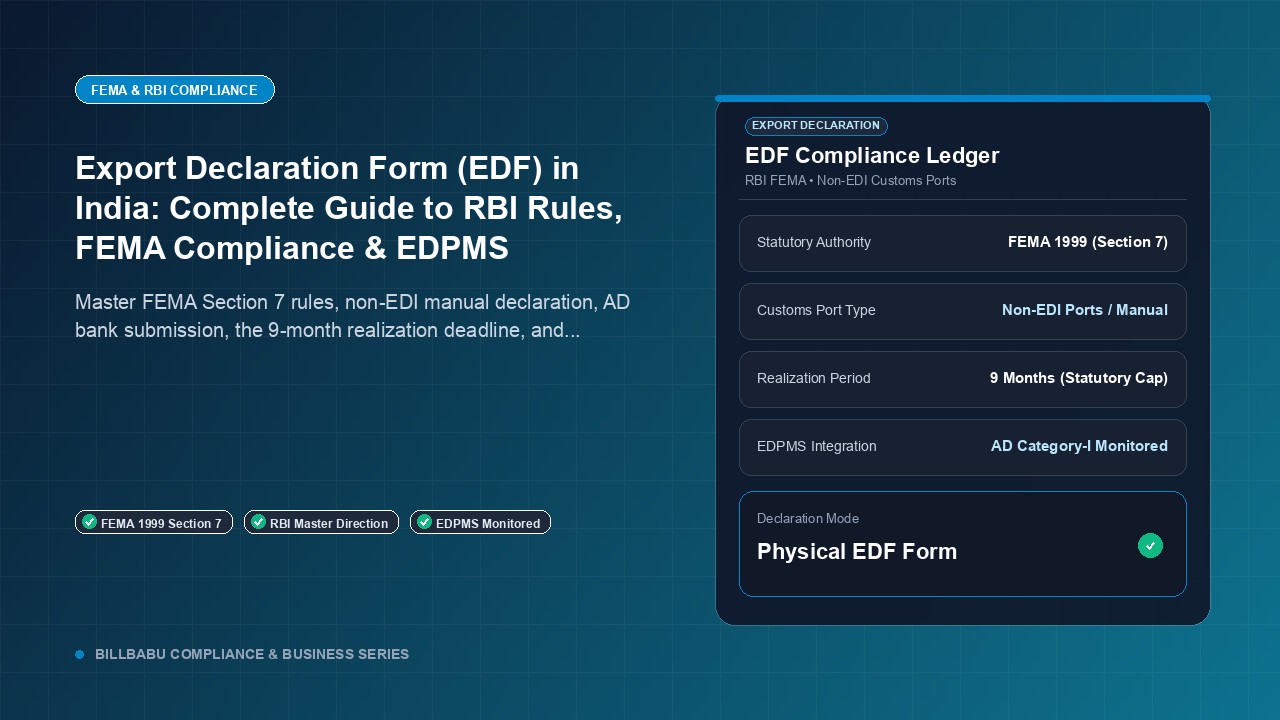
Export Declaration Form (EDF) in India: Complete Guide to RBI Rules, FEMA Compliance & EDPMS
10 min read
QRMP Scheme Under GST: Quarterly Returns, Monthly Payments Explained
2 min read
GST invoicing made easy for Indian small businesses
Create GST-compliant invoices & estimates, track payments, manage parties and inventory — all from your phone. 14-day free trial, no credit card needed.