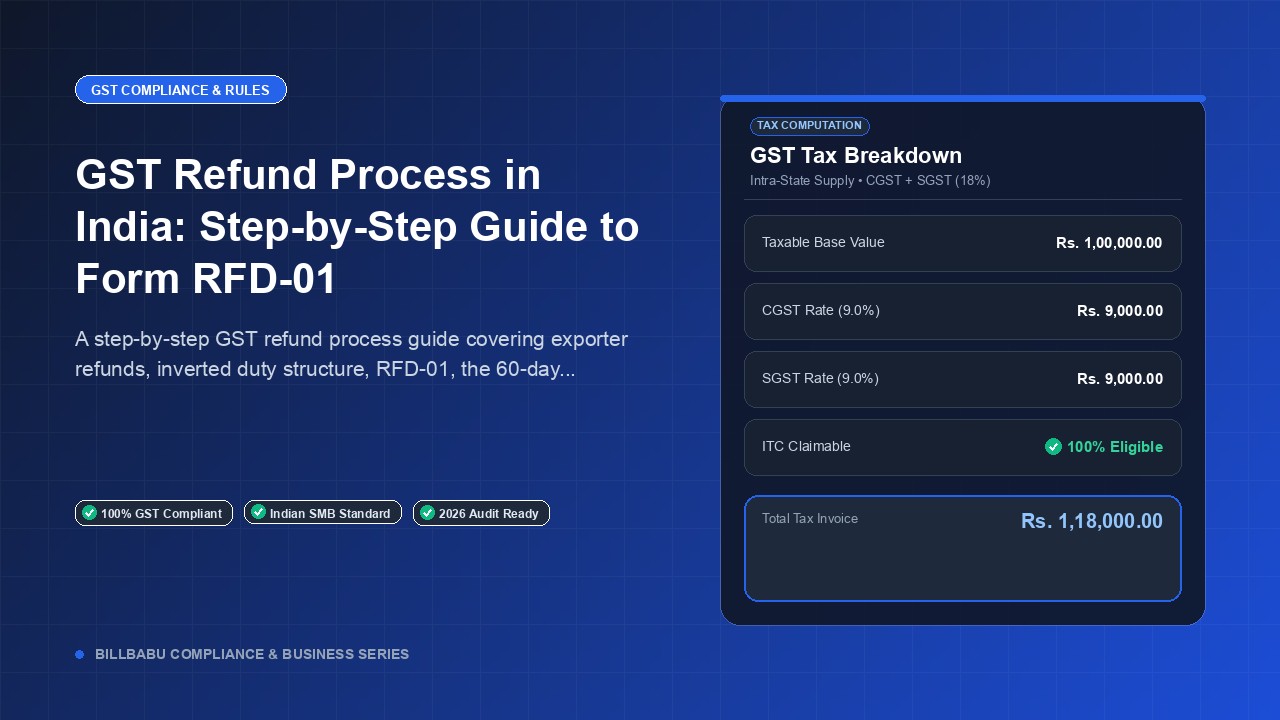
GST Refund Process in India: Step-by-Step Guide to Form RFD-01
A step-by-step GST refund process guide covering exporter refunds, inverted duty structure, RFD-01, the 60-day timeline, and 6 percent interest.
BillBabu Team
BillBabu App Team
A step-by-step GST refund process guide covering exporter refunds, inverted duty structure, RFD-01, the 60-day timeline, and 6 percent interest.
When You Are Entitled to a GST Refund
GST refunds arise primarily in three scenarios: exports of goods or services (zero-rated supplies), inverted duty structure (input GST higher than output GST), and excess balance in the electronic cash ledger. Other situations include refund of tax paid on supplies to SEZ, refund on account of finalization of provisional assessment, and refund of pre-deposit in appeals. Section 54 of the CGST Act lays down the law and Rule 89 prescribes the documentation. The two-year limitation for filing refund applications runs from the relevant date defined in the explanation to Section 54.
Filing Form RFD-01 on the GST Portal
Refund applications are filed online in form RFD-01 under Services > Refunds > Application for Refund on the GST portal. You choose the refund category (export with payment of tax, export under LUT, inverted duty, etc.), select the tax period, and the portal auto-populates eligible amounts from GSTR-1 and GSTR-3B. Statement 3 (for exports) or Statement 1 (for inverted duty) must be uploaded with invoice-level detail. Once submitted, an ARN is generated and the application is routed to the jurisdictional officer.
The 60-Day Timeline and 6 Percent Interest
Section 54(7) requires the proper officer to sanction or reject the refund within 60 days from receipt of a complete application. If the refund is delayed beyond 60 days, Section 56 mandates interest at 6 percent per annum (9 percent if the delay is due to an order in appeal). In practice, exporters under LUT typically receive provisional refunds of 90 percent within seven days under Rule 91 if their compliance rating is clean. Inverted duty refunds tend to take the full 60 days because of formula-based scrutiny.
Documentation Checklist and Common Rejection Reasons
A complete RFD-01 application includes a copy of the LUT (for exporters), shipping bills with EGM linkage, bank realization certificates (BRCs) or FIRCs for service exports, a Chartered Accountant certificate if refund exceeds Rs. 2 lakh, and a detailed undertaking. The most common reasons for rejection are FIRC not received within one year, mismatch between shipping bill value and GSTR-1, ITC reversal not done on inputs used in exempt supplies, and incorrect refund category selection. A pre-filing checklist almost always saves a 60-day round trip.
Tracking Refunds and Documentation With BillBabu
Exporters and inverted-duty businesses on BillBabu can tag every invoice with LUT or with-payment-of-tax status, link BRCs and shipping bills to the originating invoice, and export a ready-to-upload RFD-01 statement in the GST portal format. The platform also tracks ARN status and flags the 60-day deadline so interest claims are not missed when the department drags its feet. For mid-sized exporters claiming refunds every month, this turns refund tracking from a finance-team headache into a routine workflow.
Built for Indian small businesses. BillBabu is GST-compliant billing software that helps you create invoices, manage estimates, track payments and stay audit-ready — from your phone. Learn more about BillBabu or download the app.
Tags
Related Articles
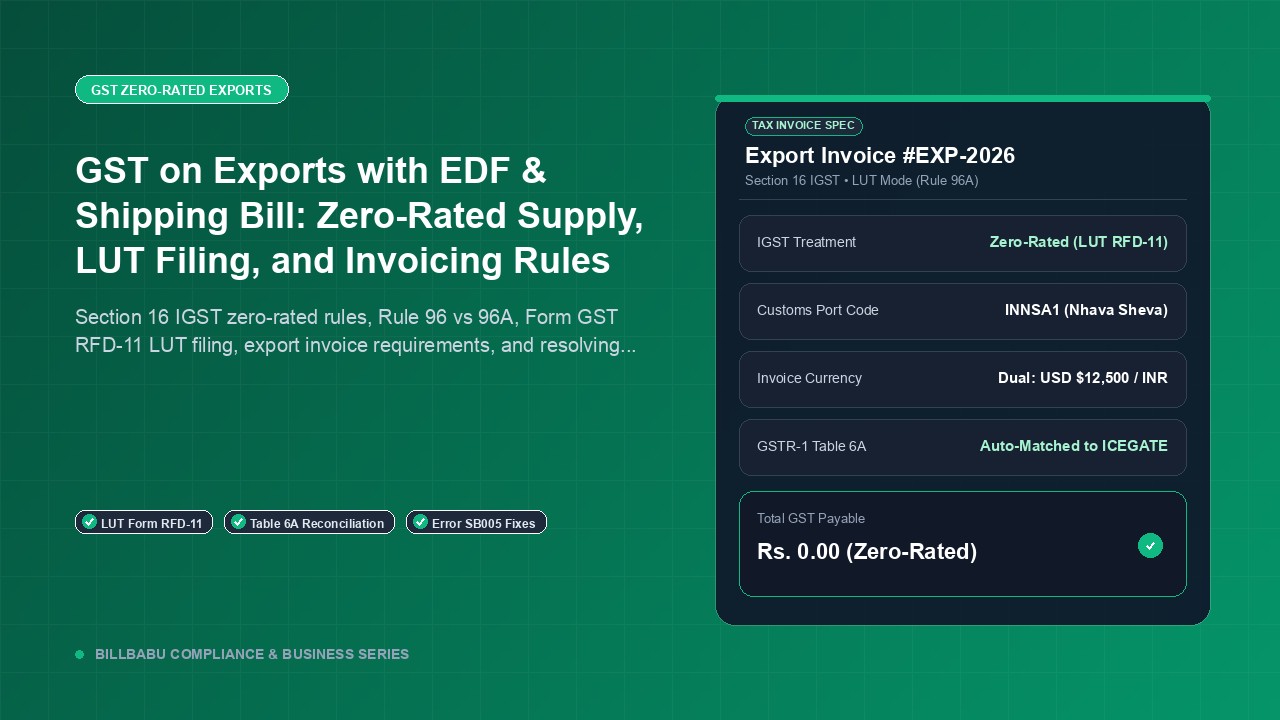
GST on Exports with EDF & Shipping Bill: Zero-Rated Supply, LUT Filing, and Invoicing Rules
8 min read
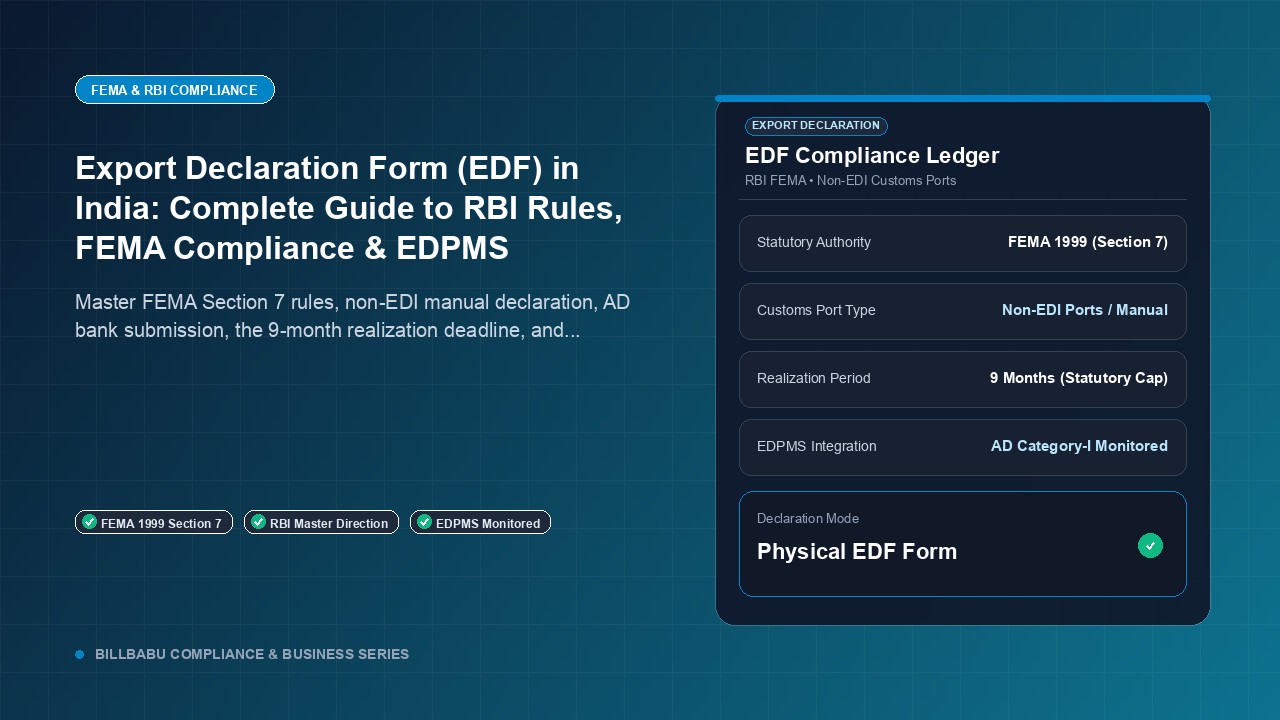
Export Declaration Form (EDF) in India: Complete Guide to RBI Rules, FEMA Compliance & EDPMS
10 min read
QRMP Scheme Under GST: Quarterly Returns, Monthly Payments Explained
2 min read
GST invoicing made easy for Indian small businesses
Create GST-compliant invoices & estimates, track payments, manage parties and inventory — all from your phone. 14-day free trial, no credit card needed.