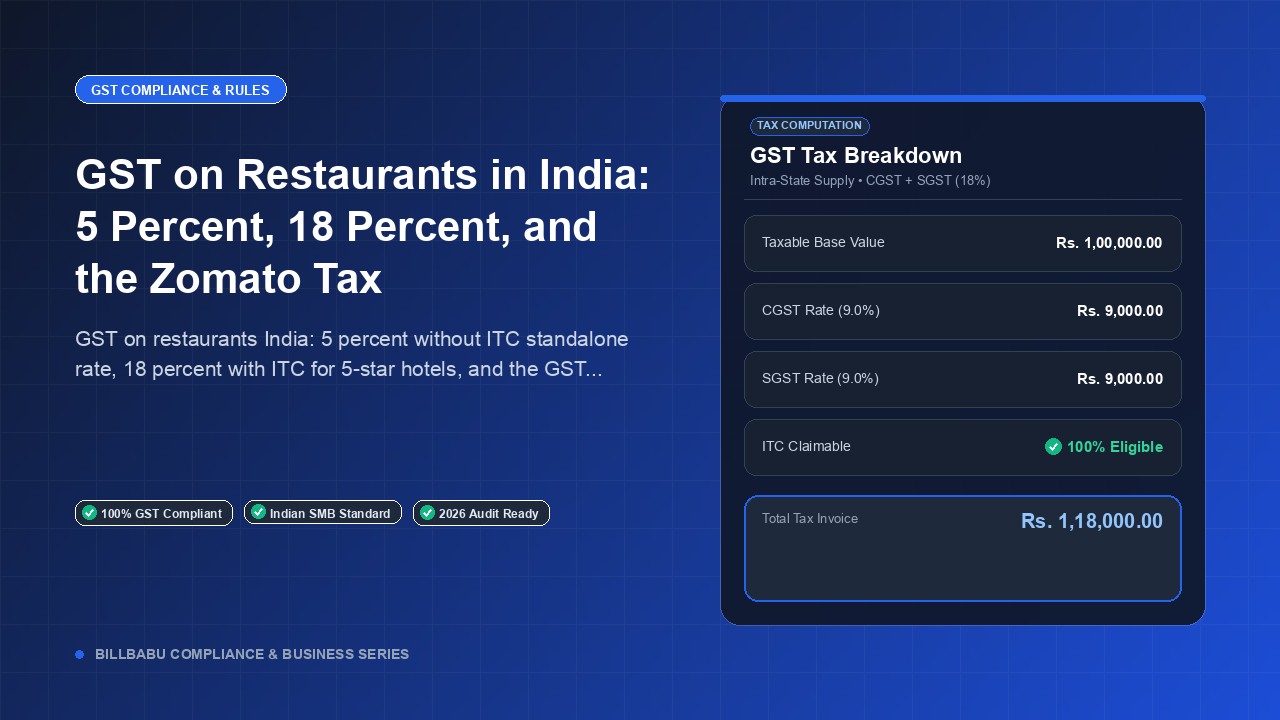
GST on Restaurants in India: 5 Percent, 18 Percent, and the Zomato Tax
GST on restaurants India: 5 percent without ITC standalone rate, 18 percent with ITC for 5-star hotels, and the GST treatment of Zomato and Swiggy.
BillBabu Team
BillBabu App Team
GST on restaurants India: 5 percent without ITC standalone rate, 18 percent with ITC for 5-star hotels, and the GST treatment of Zomato and Swiggy.
The Restaurant GST Rate Structure
Standalone restaurants — whether dine-in, takeaway, or delivery — attract 5 percent GST without ITC under Notification 11/2017 (as amended). The without-ITC condition means restaurants cannot claim credit on rent, raw material, kitchen equipment, or contractor services, and these costs are absorbed into the menu price. The 5 percent rate also applies to outdoor catering and pandal services. This concessional rate is one of the few flat GST regimes still in operation post-2018 reforms.
The 18 Percent With-ITC Slab for Premium Hotels
Restaurants located within hotels where the room declared tariff is Rs. 7,500 or more per night attract 18 percent GST with full ITC. The room tariff threshold is checked at the property level, not transactionally, so a 5-star hotel that publishes Rs. 8,000 as its lowest standard room rate falls into the 18 percent slab even if a customer eats at the restaurant without staying at the hotel. This structure rewards premium hotel chains with ITC eligibility, partially offsetting the higher output rate.
The Zomato and Swiggy Tax: Section 9(5)
From 1 January 2022, e-commerce operators like Zomato and Swiggy must collect and pay 5 percent GST on restaurant supplies made through their platform under Section 9(5) of the CGST Act. The restaurant no longer charges GST to the customer for orders fulfilled through these platforms, but it also cannot claim ITC on inputs used for those supplies. Restaurants serving both walk-in and aggregator customers must therefore maintain a clear split in their books between the two channels. This is one of the most operationally challenging compliance changes since GST itself.
Cloud Kitchens and Multi-Channel Restaurants
Cloud kitchens operating only through aggregators face a strange situation: 100 percent of revenue is taxed at Section 9(5) by the platform, but they receive no ITC. Many cloud kitchens have therefore registered as composition dealers at 5 percent without ITC (effectively the same outcome with lower compliance), or as restaurants exclusively for dine-in to retain some ITC. The choice of structure has real margin implications and should be revisited every six months as the business mix changes.
Restaurant Billing and Reconciliation With BillBabu
BillBabu lets restaurants tag every order as dine-in, takeaway, delivery via aggregator, or own-delivery, applies the correct 5 percent or Section 9(5) treatment automatically, and reconciles Zomato and Swiggy aggregator settlement reports against POS sales. Monthly summaries show channel-wise revenue, aggregator commissions, TDS, and net pay-outs in one view. For a mid-sized QSR operating across both online aggregators and dine-in, this collapses an entire weekend of reconciliation into a single dashboard.
Built for Indian small businesses. BillBabu is GST-compliant billing software that helps you create invoices, manage estimates, track payments and stay audit-ready — from your phone. Learn more about BillBabu or download the app.
Tags
Related Articles
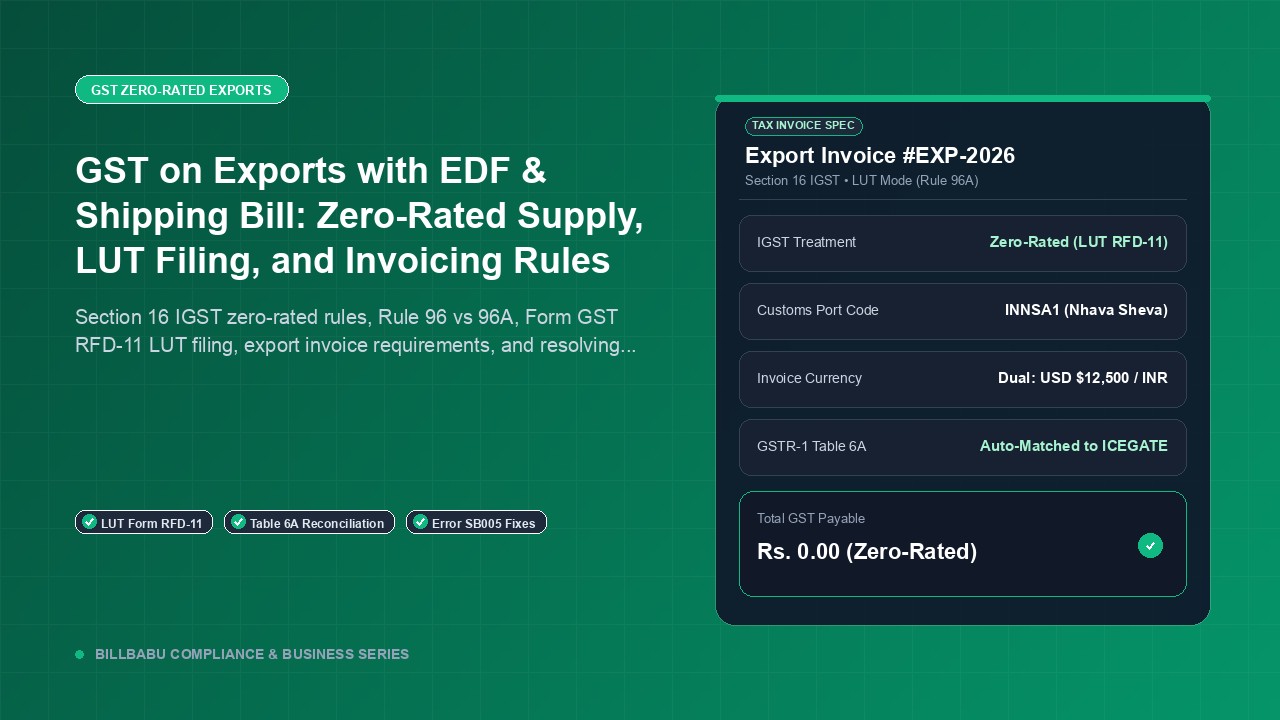
GST on Exports with EDF & Shipping Bill: Zero-Rated Supply, LUT Filing, and Invoicing Rules
8 min read
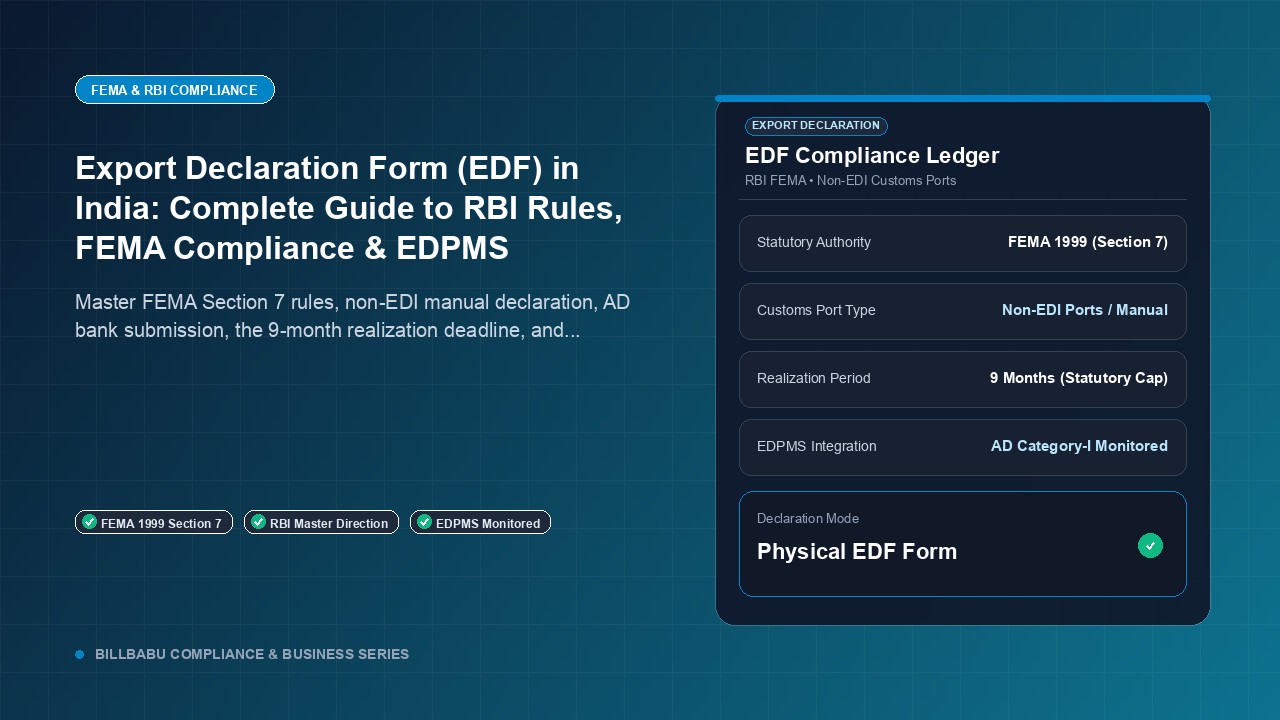
Export Declaration Form (EDF) in India: Complete Guide to RBI Rules, FEMA Compliance & EDPMS
10 min read
QRMP Scheme Under GST: Quarterly Returns, Monthly Payments Explained
2 min read
GST invoicing made easy for Indian small businesses
Create GST-compliant invoices & estimates, track payments, manage parties and inventory — all from your phone. 14-day free trial, no credit card needed.