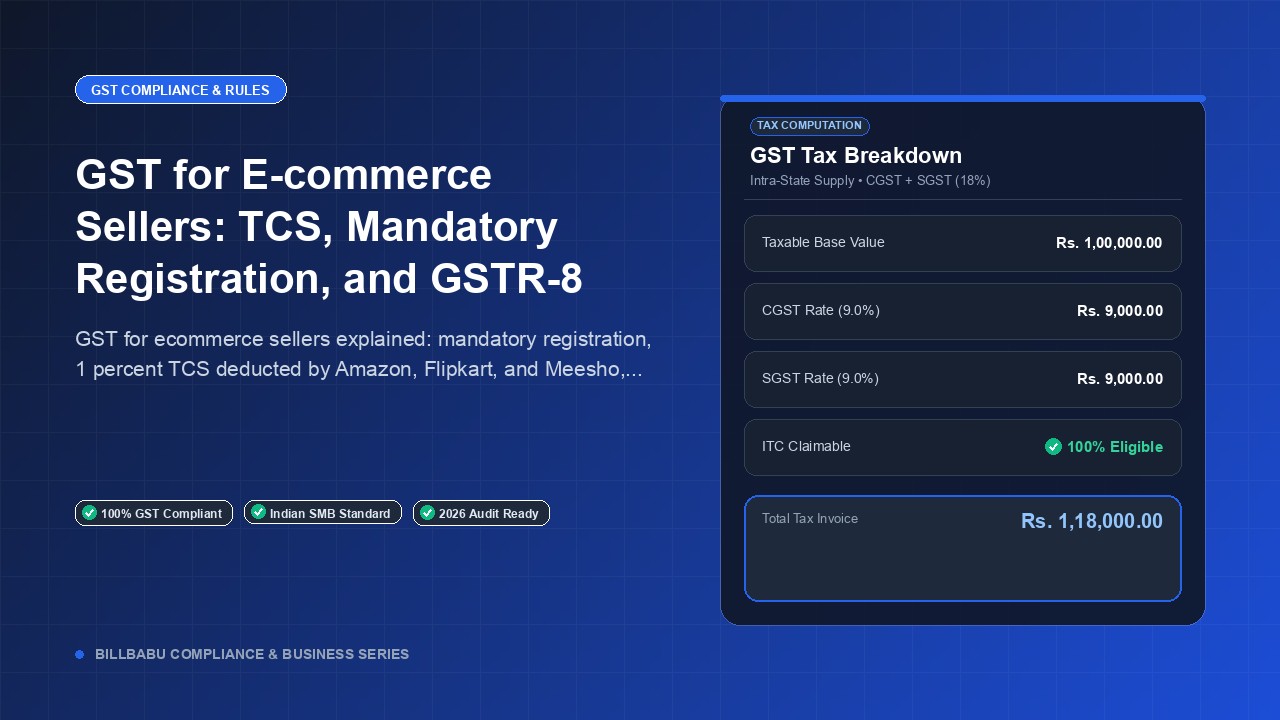
GST for E-commerce Sellers: TCS, Mandatory Registration, and GSTR-8
GST for ecommerce sellers explained: mandatory registration, 1 percent TCS deducted by Amazon, Flipkart, and Meesho, and how to claim it via GSTR-8.
BillBabu Team
BillBabu App Team
GST for ecommerce sellers explained: mandatory registration, 1 percent TCS deducted by Amazon, Flipkart, and Meesho, and how to claim it via GSTR-8.
Why E-commerce Sellers Cannot Use the Rs. 20 Lakh Threshold
Section 24 of the CGST Act mandates GST registration for anyone supplying goods through an e-commerce operator (ECO) like Amazon, Flipkart, or Meesho, regardless of turnover. The Rs. 20 lakh threshold available to offline traders does not apply. From 1 October 2023, small intra-state suppliers (turnover under Rs. 40 lakh for goods, Rs. 20 lakh for services) selling only within their home state through ECOs are exempt under Notification 34/2023, but the moment they sell interstate, registration becomes mandatory again. For most online sellers, GST registration is a day-one requirement.
The 1 Percent TCS Deducted by Marketplaces
Under Section 52 of the CGST Act, every e-commerce operator must collect 1 percent TCS (0.5 percent CGST + 0.5 percent SGST, or 1 percent IGST for interstate) on the net taxable value of sales made through its platform. Amazon, Flipkart, Meesho, Myntra, and similar platforms deduct this before transferring sale proceeds to the seller. TCS is collected on net sales after returns within the same month, not on the gross order value. The amount deducted is deposited with the government by the 10th of the next month.
GSTR-8 and Claiming TCS Credit
The e-commerce operator files GSTR-8 by the 10th of each month, reporting TCS deducted seller-wise. Once filed, the TCS amount auto-populates in the seller cash ledger on the GST portal under "TCS Credit Received". Sellers must accept the auto-populated entries to actually use the credit against their output tax liability. Failing to accept TCS entries means the cash ledger balance sits idle while the seller pays tax in cash every month, a surprisingly common oversight among new sellers.
Filing GSTR-1 and GSTR-3B as an E-commerce Seller
E-commerce sellers must report platform-wise outward supplies in GSTR-1, including a separate table for supplies made through e-commerce operators. GSTR-3B then summarizes total liability and applies ITC and TCS credit. Sellers operating on multiple marketplaces (Amazon plus Flipkart plus a Shopify store, for example) must consolidate sales across channels before filing. Mismatches between marketplace reports and self-filed GSTR-1 are the leading cause of notices for online sellers.
Multi-Channel Selling Simplified With BillBabu
BillBabu lets you import sales reports from Amazon, Flipkart, and Meesho, auto-tags TCS deductions per platform, and reconciles them against the GST portal cash ledger so no credit is left unclaimed. The platform also generates state-wise sales summaries for GSTR-1 and handles returns and replacements correctly so your output liability reflects net sales, not gross. For a seller managing inventory across three or four marketplaces, this collapses a multi-day monthly reconciliation into a single afternoon.
Built for Indian small businesses. BillBabu is GST-compliant billing software that helps you create invoices, manage estimates, track payments and stay audit-ready — from your phone. Learn more about BillBabu or download the app.
Tags
Related Articles
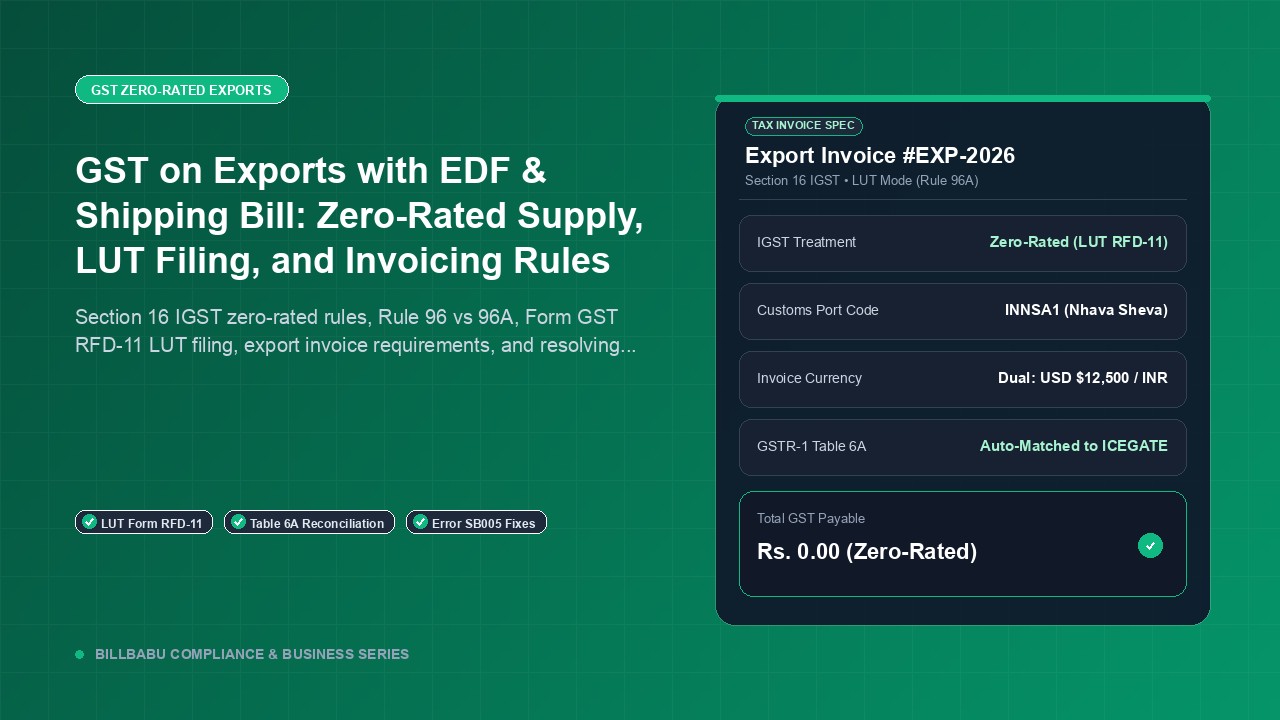
GST on Exports with EDF & Shipping Bill: Zero-Rated Supply, LUT Filing, and Invoicing Rules
8 min read
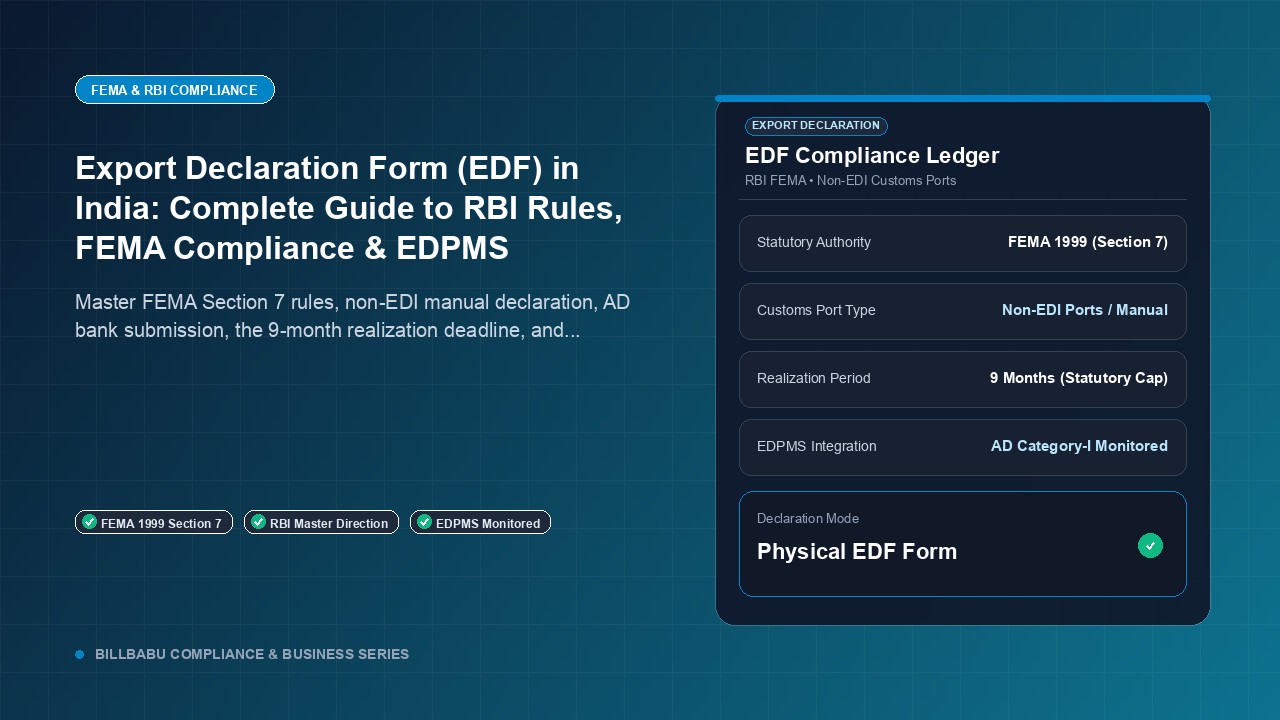
Export Declaration Form (EDF) in India: Complete Guide to RBI Rules, FEMA Compliance & EDPMS
10 min read
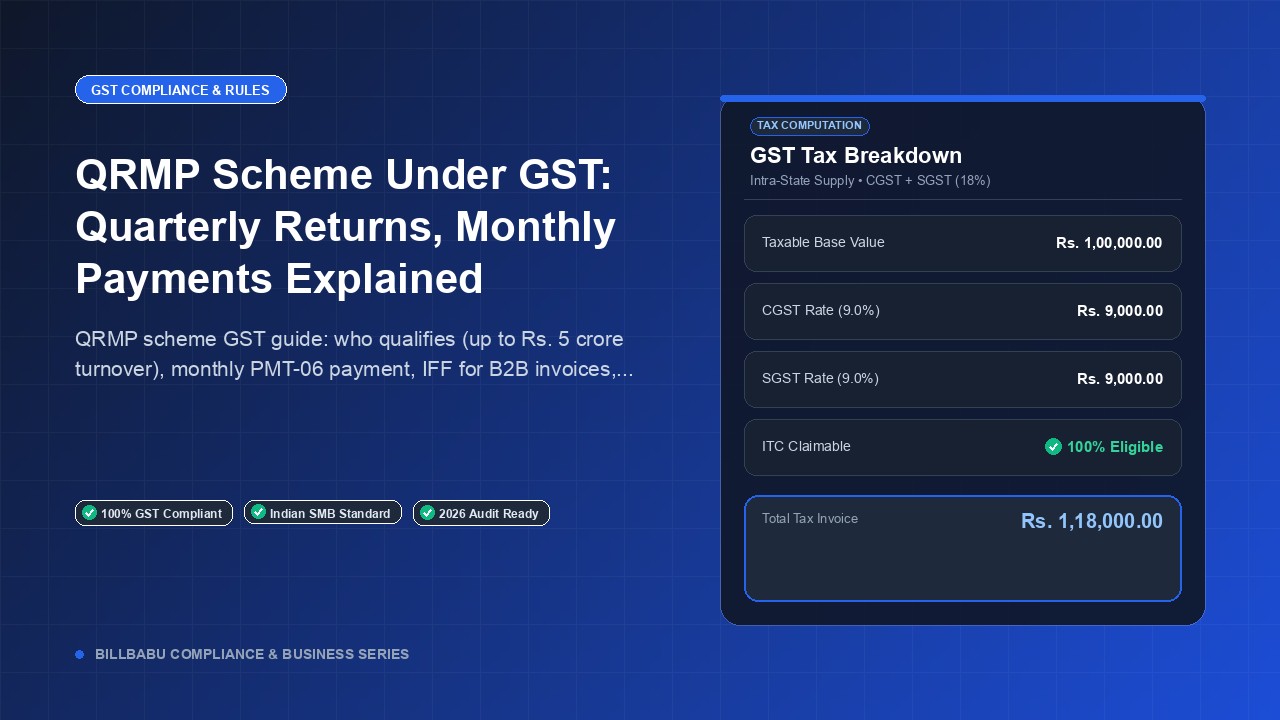
QRMP Scheme Under GST: Quarterly Returns, Monthly Payments Explained
2 min read
GST invoicing made easy for Indian small businesses
Create GST-compliant invoices & estimates, track payments, manage parties and inventory — all from your phone. 14-day free trial, no credit card needed.