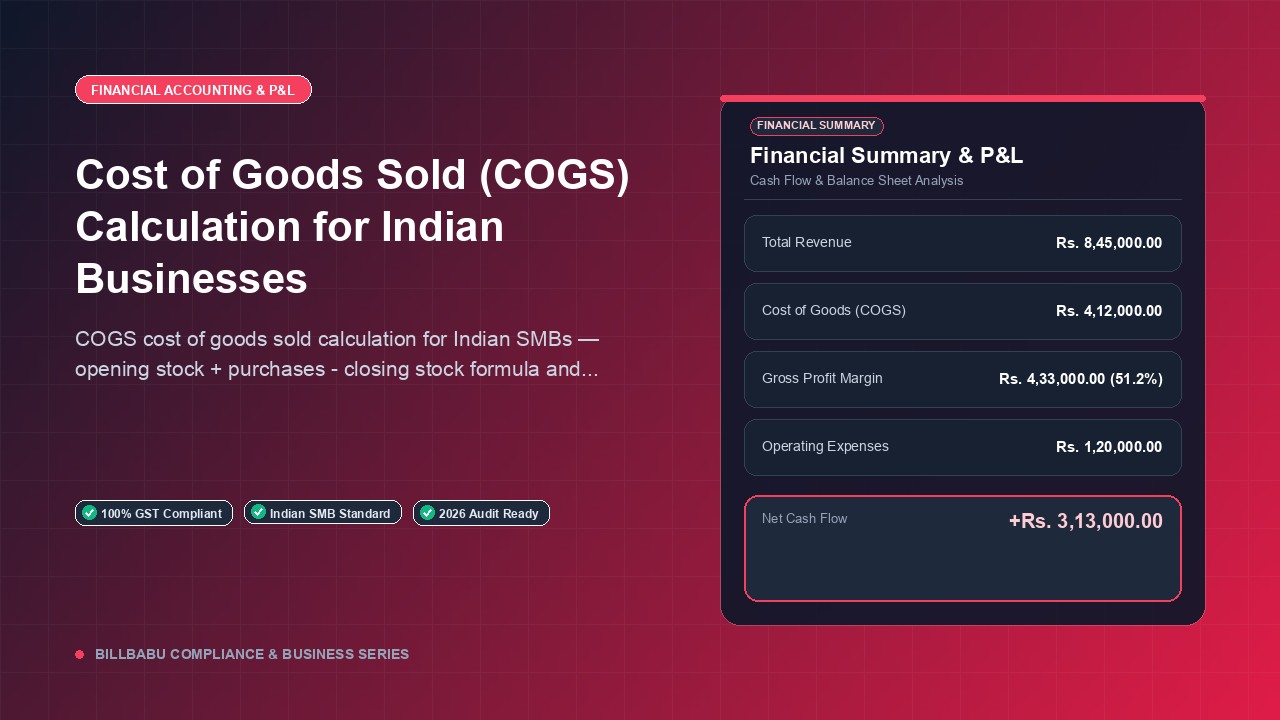
Cost of Goods Sold (COGS) Calculation for Indian Businesses
COGS cost of goods sold calculation for Indian SMBs — opening stock + purchases - closing stock formula and inventory valuation impact.
BillBabu Team
BillBabu App Team
COGS cost of goods sold calculation for Indian SMBs — opening stock + purchases - closing stock formula and inventory valuation impact.
What COGS Is and Why It Matters
Cost of Goods Sold (COGS) is the direct cost of producing or purchasing the goods that you actually sold during a period. For a trader it is opening stock plus purchases minus closing stock; for a manufacturer it also includes raw material consumption, factory labour, and factory overheads. COGS sits between Sales and Gross Profit on the P&L — every rupee of inaccuracy in COGS is a rupee of error in your gross margin, your taxable income and your inventory on the balance sheet. Banks examining your statements always check the Gross Margin trend, so consistent COGS calculation matters as much for credit as it does for tax.
The Standard COGS Formula
COGS = Opening Stock + Net Purchases + Direct Expenses - Closing Stock. Net Purchases = Gross Purchases + Freight Inward + Customs Duty - Purchase Returns - Discount Received. Direct Expenses for manufacturers include factory wages, power and fuel, consumable stores, and factory rent. For a trading business with opening stock Rs. 3 lakh, purchases Rs. 20 lakh, freight inward Rs. 50,000 and closing stock Rs. 4 lakh — COGS = 3 + 20 + 0.5 - 4 = Rs. 19.5 lakh. If sales were Rs. 25 lakh, the gross profit is Rs. 5.5 lakh and the gross margin 22%.
Inventory Valuation Method — FIFO vs Weighted Average
How you value closing stock directly changes COGS. FIFO (First-In-First-Out) assumes the oldest stock is sold first, so closing stock reflects the most recent purchase prices — in an inflationary market, FIFO understates COGS and inflates profit. Weighted Average smooths cost over the period and is the most common method for SMBs. AS 2 / Ind AS 2 allow only FIFO or Weighted Average; LIFO is not permitted in Indian GAAP. Once you pick a method, stick with it — switching requires disclosure and adjustment of the opening balance.
Lower of Cost or Net Realisable Value
Indian standards require closing stock to be valued at the lower of cost and Net Realisable Value (NRV). NRV is the estimated selling price minus expected costs of completion and sale. If stock has become obsolete, damaged, or its market price has fallen below cost, you must write it down — the write-down is charged to COGS in that period. Many SMBs miss this and end up with overstated inventory on the balance sheet for years; a clean stock audit at year-end catches this.
Get COGS and Margin Tracking on Autopilot with BillBabu
BillBabu maintains a perpetual inventory system — every purchase increases stock at its weighted average cost, every sale reduces it, and the system can show you cost-of-sale and gross margin on every invoice in real time. The year-end Closing Stock report is broken down by item, location and ageing, with a flag for items whose market price has fallen below cost. COGS in your P&L reconciles to the last rupee with your inventory register — auditors typically clear stock testing in a single visit instead of two days of reconciliation.
Built for Indian small businesses. BillBabu is GST-compliant billing software that helps you create invoices, manage estimates, track payments and stay audit-ready — from your phone. Learn more about BillBabu or download the app.
Tags
Related Articles
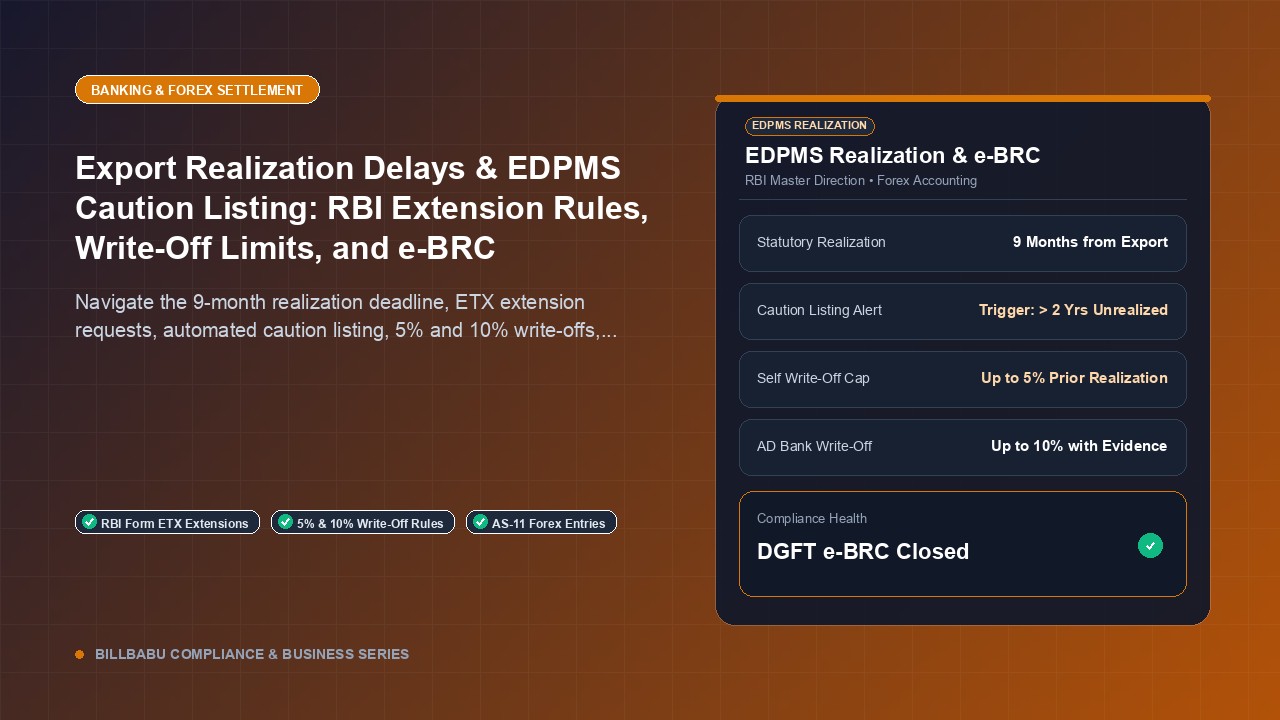
Export Realization Delays & EDPMS Caution Listing: RBI Extension Rules, Write-Off Limits, and e-BRC
8 min read
GST on Payment Gateway MDR & Daily UPI Settlements: Journal Entries, ITC, and Reconciliation Guide
7 min read
Fixed Assets Register: Format, Contents and Depreciation Schedule
3 min read
GST invoicing made easy for Indian small businesses
Create GST-compliant invoices & estimates, track payments, manage parties and inventory — all from your phone. 14-day free trial, no credit card needed.